Question: What is the biggest Polish city?
Answer: Chicago.
If you are Polish, you have definitely heard this joke. Yes, the Poles traveled far and wide: sometimes, willingly; mostly, not so much. Many sought refuge in places as far as Brazil following the partitions of Poland by Russia, Prussia and Austria between 1772 and 1795. In 1795, the unthinkable happened. The state of Poland ceased to exist1. It disappeared from the map of Europe for 123 years, eventually restored after the First World War ended in 19182.
But let’s go back to the 19th century. The Ottoman Empire was opposed to the partitions of Poland. At that time, the Ottomans and the Russians were pretty much constantly at war, save for a few years here and there. Quite as per the old adage The enemy of my enemy is a friend of mine, the Polish statesman Prince Adam Czartoryski3 considered the empire a safe heaven for Polish revolutionaries, political immigrants and soldiers. The prince had connections in France. He sent an envoy, Michał Czajkowski, to the Constantinople-based French monks from the order of St Vincent a Paulo. With their help, an organisation whose aim was to look after the displaced Polish people was set up. In 1842, it was agreed that Poles could settle on land that belonged to the order4. This was the beginning of Polonezköy- the Polish village in the north-eastern part of modern day Istanbul.
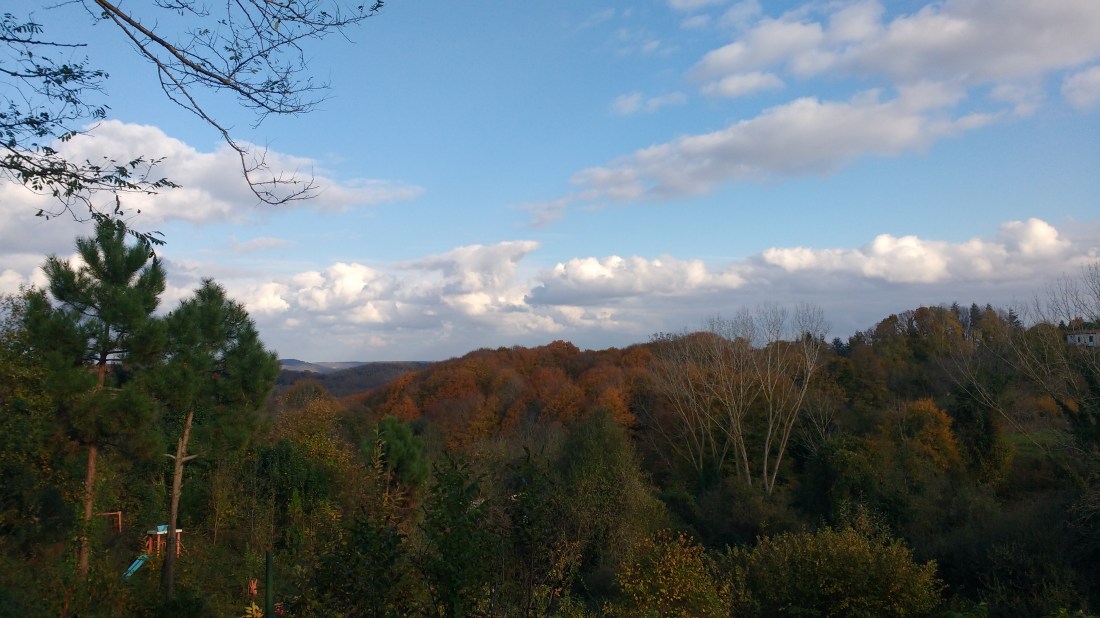
My friends and I drove to Polonezköy on a perfectly nice winter day. The village is in the municipality of Beykoz, a great place to escape to from the concrete that has taken over Istanbul. (That said, we did drive behind a lovely cement mixer for some of the way.) The first sign of Polish presence in the village was unmistakable:
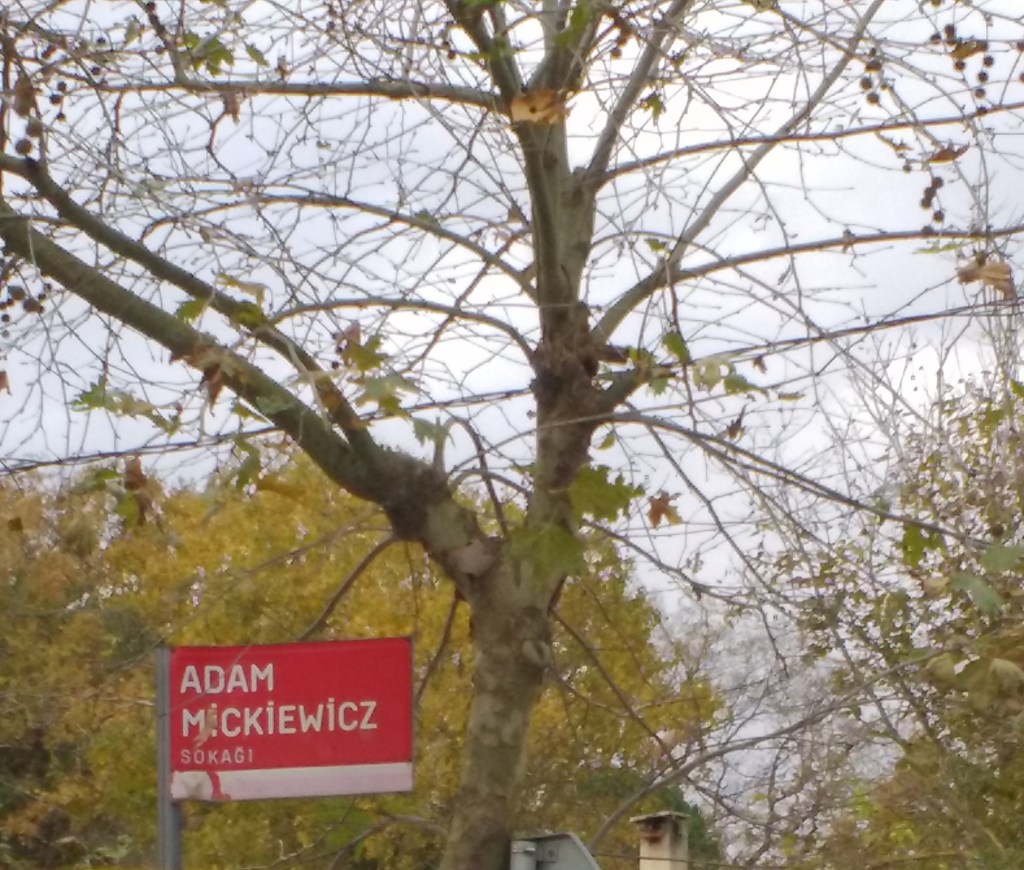
Adam Mickiewicz is considered the greatest Polish poet of all times5; I think it’s safe to say that there is probably a Mickiewicz Street in most, if not all towns and villages in Poland. The residents of Polonezköy have certainly made the right decision here. I was quite surprised to find out that Mickiewicz died in Istanbul, then-Constantinople in 1855, sent on a mission by Prince Czartoryski. (Digression: I have seen Poland Street in both Manchester and London, but not a Mickiewicz St. I wonder whether that makes the Polonezköy immigrants more introverted, or whether the new arrivals to Britain were concerned about the locals struggling with such a foreign-sounding name and so they settled on the foolproof Poland St. But anyway, I digress… )
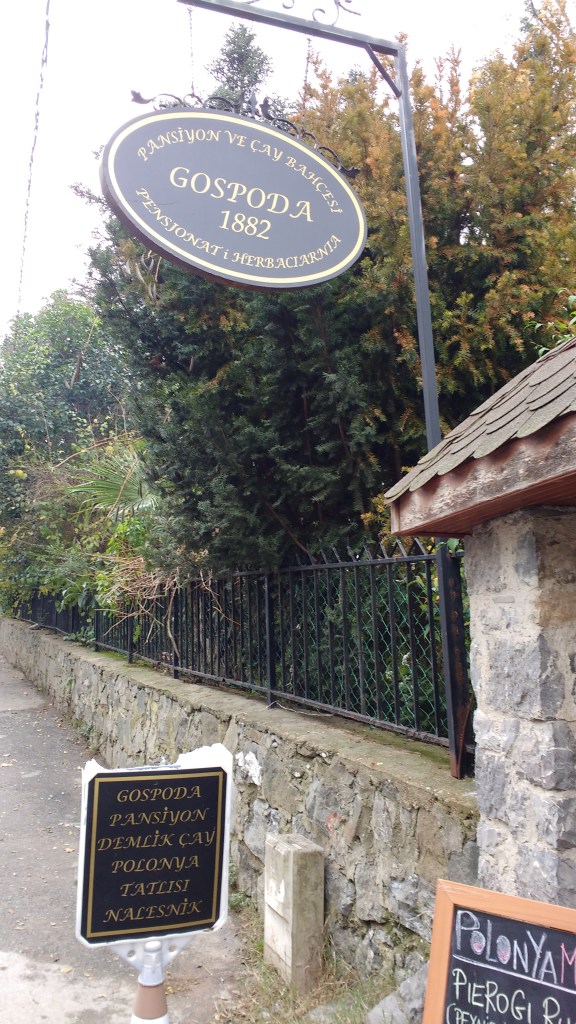
One might find it hard to think of the similarities between Turkey and Poland, but there is actually one that is blindingly obvious – the obsession with tea. It is different, of course – the Turks use special kettles – one large at the bottom (for the water), one small at the top (for the tea leaves). Please do not offend a Turk by offering tea made from tea bags – that is acceptable only in exceptional circumstances, if the real thing is not available. The Poles also like their tea. Quite unlike the Turks, they don’t normally have it black, but rather it with a slice of lemon (which, to be fair, I have also seen in Turkey). An intersting fact: the Polish call tea with milk a Bavarian tea (bawarka), but such a concoction is generally rare in Poland. Visiting relatives in Poland, as well as Turkey, will always involve tea. I think my personal best is eight Turkish and five Polish teas a day respectively. So, one thing I was expecting to find in Polonezköy was tea rooms; and sure enough, there they were:
One thing I certainly wasn’t expecting to find in Polonezköy was this:
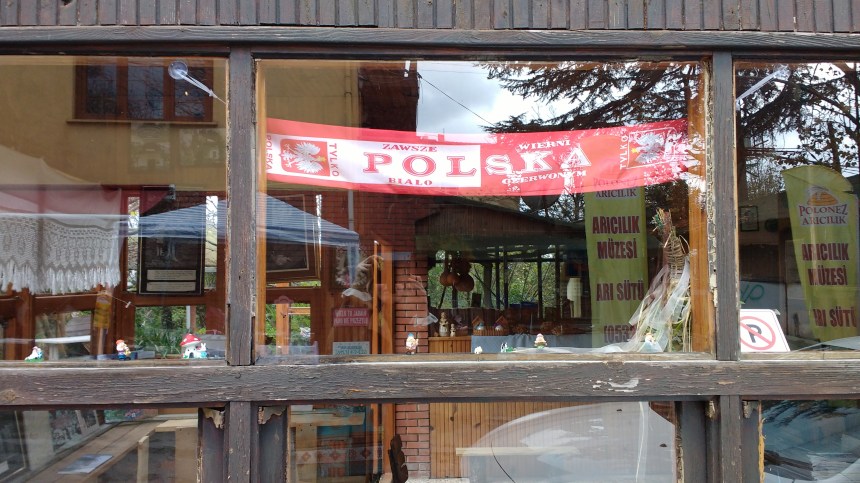
Right in the middle of the display window of a small shop by the tea rooms was this football scarf, an essential accessory for every real fan of the Polish national team. Poland, the whites and reds! – the football chant goes. Thinking about it, the Turks could sing the same as they happen to have the same national colours. OK- maybe the reds and whites, as red is predominant in the Turkish flag.
There were all sorts of things in the shop. Toys, bric-a-brac, books:
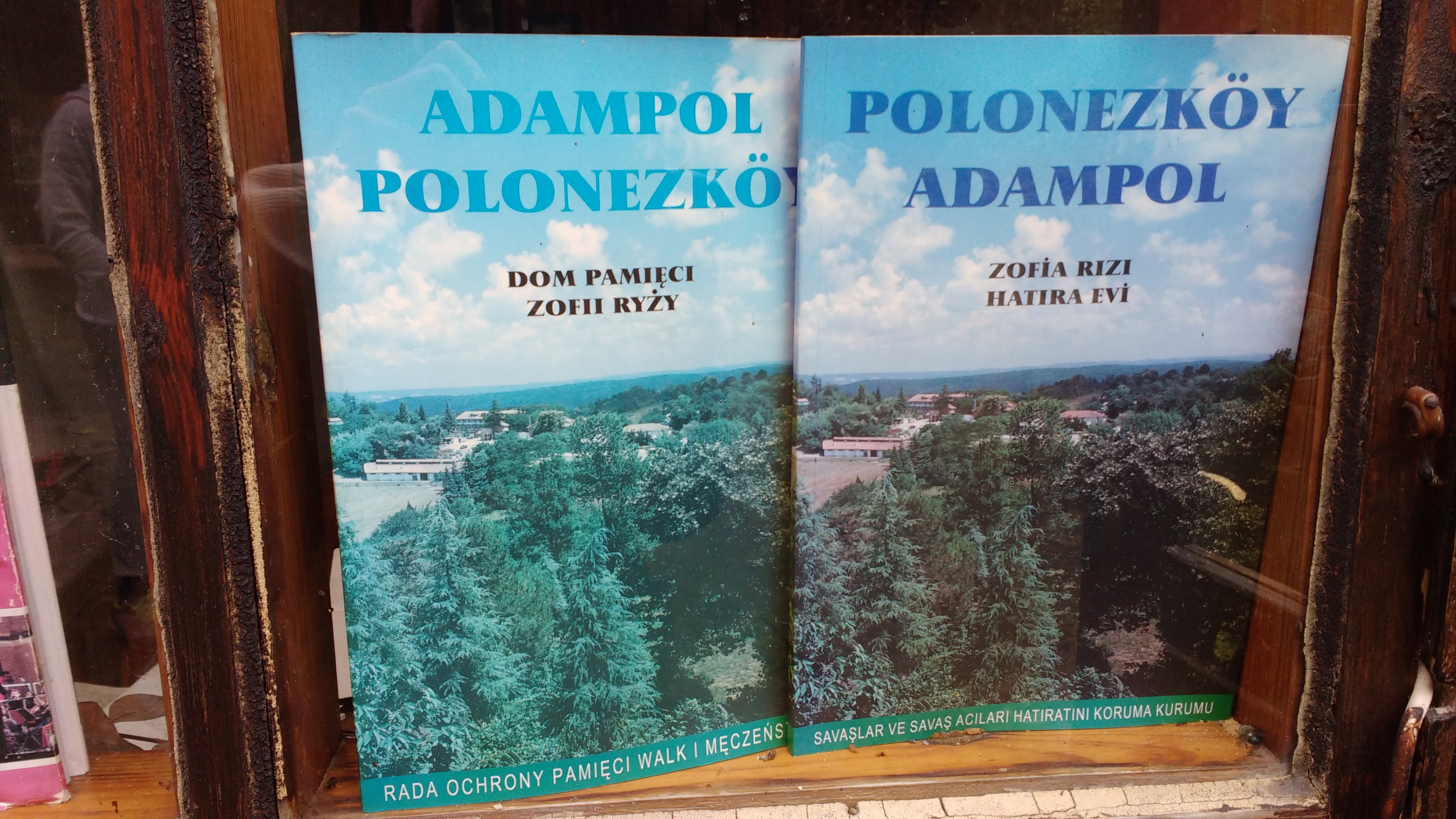
Polonezköy was formerly known as Adampol, the town of Adam. My guess is that it was named after either, or perhaps both Adams – Adam Czartoryski and / or Adam Mickiewicz. This book features the memorial house of Zofia Ryży, a much-loved former Polonezköy resident, auntie Zosia, who, in her lifetime, had done a lot to preserve the Polish spirit and traditions in the village. The house was closed to visitors on this day, sadly, but it is said to be the most beautiful building in the village, well worth a visit.
This was also in the shop – and I thought it was hilarious:
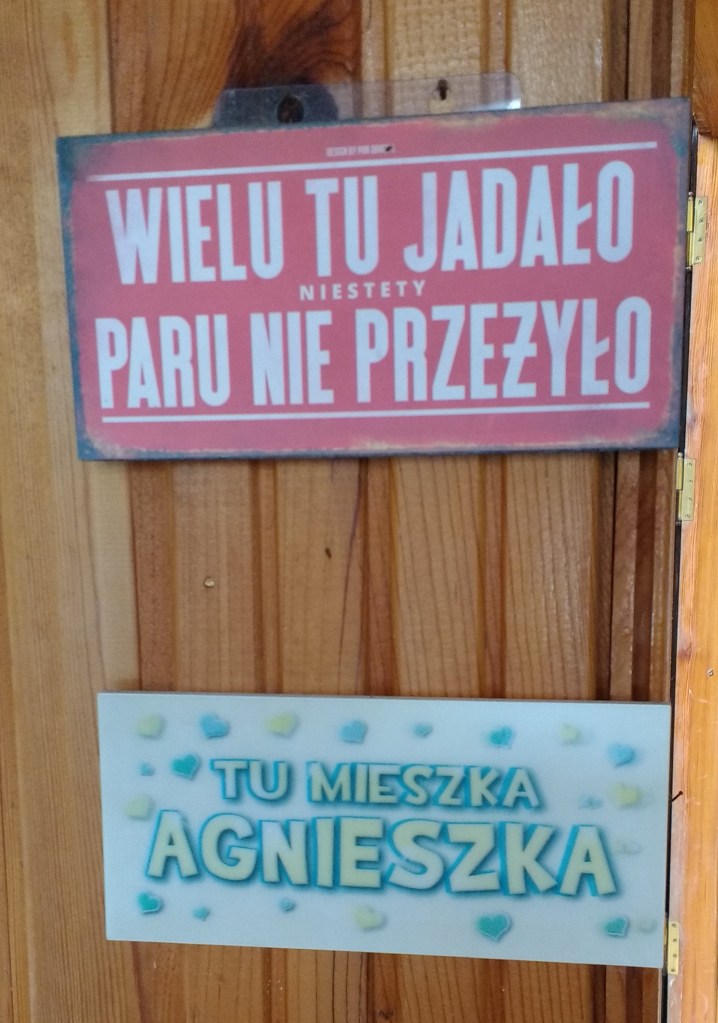
Many have eaten here. Sadly, a few didn’t survive.
Agnes lives here.
Why is that funny? I can almost hear you say. Oh, it is hilarious. But only if you know about the famous Polish song Agnieszka już dawno tutaj nie mieszka , (Agnes doesn’t live here anymore) which was part of the soundtrack of my student years in Poland. The story is about a summer holiday romance that ends in disappointment, but it seems to me that the culutral references may be a bit much for those unfamilar with the song, so I’ll stop here.
In spite of the above warning, we went to have a look at the food. As is the case with aunties and grandmothers, a variety of Polish food was available in the tea rooms. (Mini digression: You know you are half-Polish when you experience a crazy craving for the humble, but delicious and nutritios boiled potatoes, served with a little butter and topped with fresh dill. Dobre, bo polskie! 6 ) These were some of the yummy options on the menu:
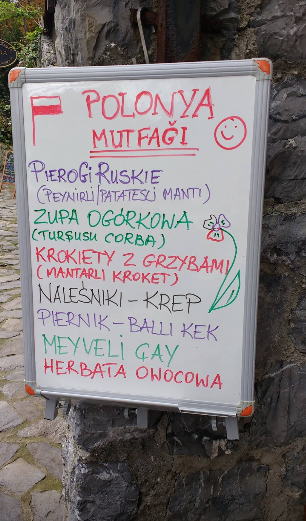
Russian pierogi – dumplings filled with a potato and white cheese mixture
Gherkin soup – usually chicken-stock based soup with shredded gherkins, diced potatoes and whole carrots
Mushroom krokiet – a type of savoury pancake, stuffed with mushrooms and pan-fried
Pancakes
Piernik – the Turkish translation is honey cake, and indeed it is made with honey. If you can imagine gingerbread with little ginger, you’ll get a good idea of piernik. In Poland, many people make it around Christmas time. The ingredients can also include different types of dried fruit and nuts.
We went in the direction of the kitchen, where we met a very nice Polish lady, Agnes, a decendant of auntie Zosia. So, Agnes did live there, after all! We weren’t hungry, so didn’t eat in the Gospoda, but the food looked very tempting. There was also a really friendly gentleman in the kitchen, who told us that the Istanbul Polish Community had planned a Saint Andrew’s day celebration, which was about to begin.
Andrzejki – Saint Andrew’s day celebration – is a Polish tradition that takes place on the night between the 29th and 30th November. Christianity prohibits fortune-telling, but St Andrew’s Eve is an exception. Historically, young women were allowed to perform all sorts of rituals on the night to help them find out more about their future husbands. These days, men and women alike want to take part in the festivities, so they can learn what the upcoming year has in store for them.
One of the rituals is wax pouring. A candle is melted and the liquid wax is poured through a key hole into a bowl of cold water. The wax settles and is taken out of the bowl. Excess water is wiped off and the person whose fortune is to be foretold holds the newly formed wax thing behind a lamp, so its shadow falls on a nearby wall. Traditionally, there may have been a qualified fortune-teller who would look at and interpret the shape and meaning of the shadow. But, since there was no designated master fortune-teller in Polonezköy, everyone who came to the event gathered and offered their insight as to the shape and meaning of the different shadows. Mine was a rooster, which was generally considered a good omen. It was a really fun afternoon of warmth, laughter, tea, snacks and music.
After the party, we drove to the nearby Polonezköy Tabiat Park. Great place, green, calm.
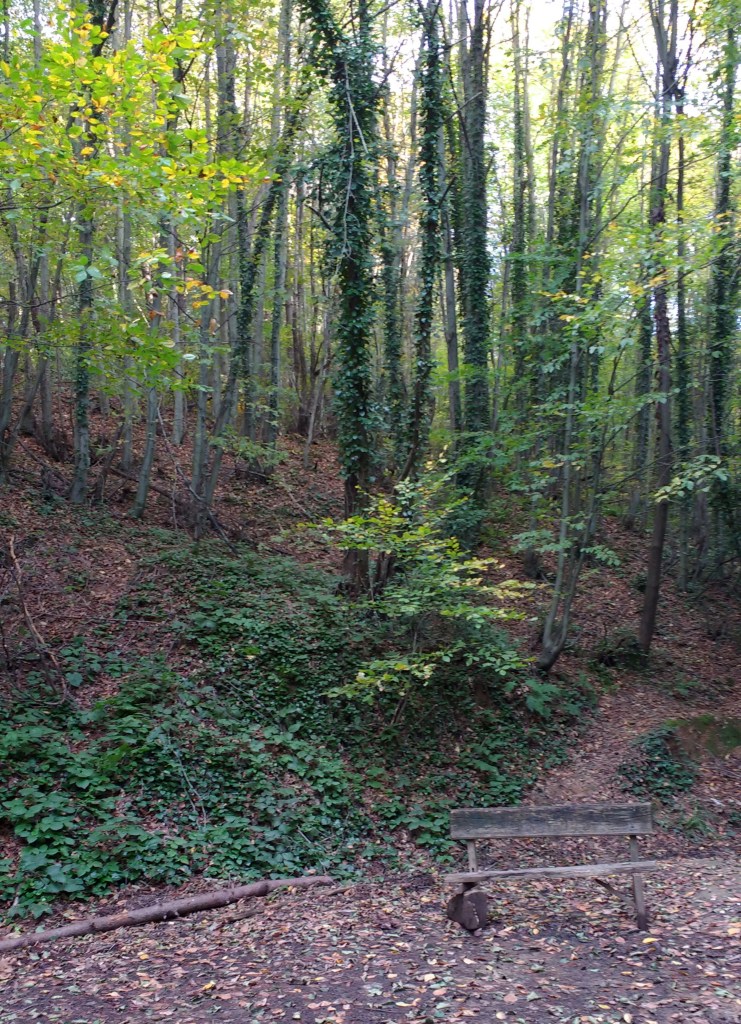
It is also quite big. We walked for about an hour when we started wondering whether we the road we were on was circular and whether it would take us back to the car. We saw an exist sign and walked in the direction it indicated. We found the exit. No car was in sight. Looking around, we understood we had gone too far back into the village. A police car drove past; we waved and asked if there was another entrance to the park. There was. Five kilometers down the road. At that point, we had had quite a tiring day, involving a lot of walking, five extra kilometers felt very far indeed. And then, the policemen said: If you wait here 5 minutes, we’ll give you a lift. And they did! Adventures, adventures…
We found the car and stayed in Polonezköy overnight. On the next morning, we drove some more around Beykoz and saw a bunch of vehicles with the sign Dirilş. They were filming a famous Turkish TV series, I was told.
There are great many things to marvel at in Istanbul. If you are looking for something different, do visit Polonezköy – you will leave with the feeling of having been not only to Turkey, but also to Poland.
References:
1, 2 Encyclopaedia Britannica, Partitions of Poland
3 Encyclopaedia Britannica, Adam Jerzy, Prince Czartoryski
4 Historia Polonezköy, www.polnezkoy.com
5 Encyclopaedia Britannica, Adam Mickiewicz
6 Marketing slogan widely used in Poland


